Flashcards gave me the words, but they didn't teach me to say them in a live conversation
My flashcard streak was the longest it had ever been. Forty-something days. I'd see 幻觉 and know it was “hallucination,” see 人工智能 and know it was “AI.” Recognition: solid.
Then in a lesson my tutor asked me to describe what I did in my job. creak creak. I knew every word she wanted me to use. I just couldn't line them up into a sentence, out loud, fast enough for a real conversation.
Needless to say, I dove into another rabbit hole to find out how polyglots move from recognizing words, to producing them, to actually holding a conversation. Recognizing a word and saying it in a sentence are two different skills. ChickenDuck was good at the first one: we transcribe your lesson, pull the vocabulary, and feed it into spaced repetition so the words stick. But “the words stick” and “I can say something” are not the same sentence. You can have a perfect review streak and still freeze the second someone talks back. Here's how I solved this for myself and now for everyone.
First, Practice Sentences
After a lesson finishes processing, ChickenDuck reads the transcript and automatically pulls out the sentences that actually mattered: the ones your tutor corrected or asked you to repeat, the patterns worth copying, the contrasts you kept tripping over. Not a word list. Full sentences you should be able to say, tagged by why they're there: correction, model, contrast. You keep the six to eight that matter, tweak the wording, and each one comes with pronunciation, a translation, and audio.
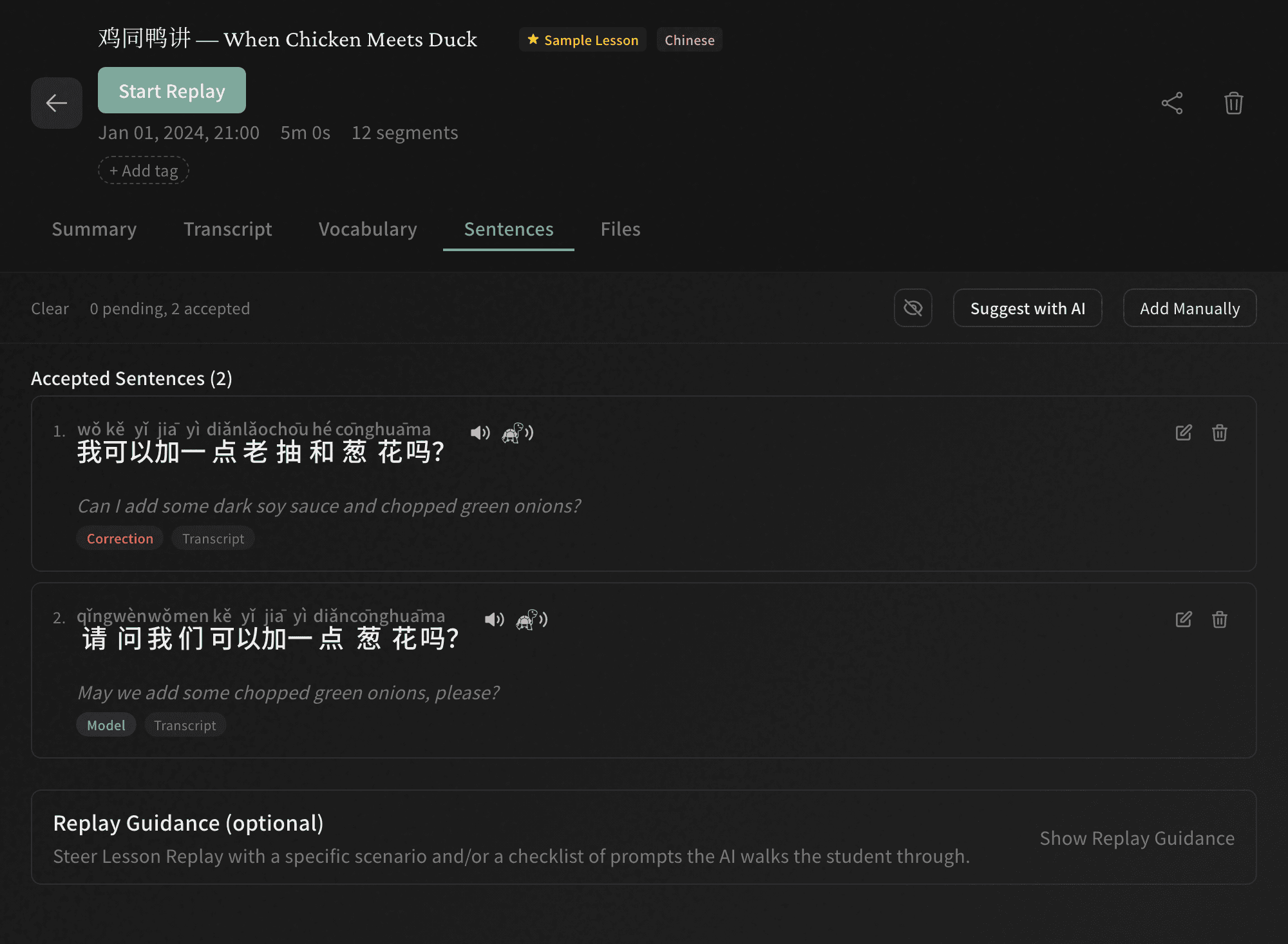
It sounds unglamorous written down but it turns “I vaguely remember this lesson was about work vocabulary” into a concrete, short list of sentences I could not yet say and now need to rehearse.
But a list is still just a list. Having the right sentences written down is not the same as being able to produce them when it counts. I know this because I have a lot of lists (and I'm sure we all do too).
The obvious fix doesn't work
The standard advice from here is “just practice with an AI.” So you open a chatbot, type “let's chat in Chinese,” and get a blank box.
Two problems. First, the bot has no idea what you just spent an hour learning, so it reaches for out-of-context vocabulary you've never seen and you're back to translating instead of talking (trust me I did this soooo much). Second, open-ended is its own trap. The hard part of practice was never the talking; it's being laser-focused on what exactly should be practised. A blank box gives you the internet's infinite possibilities of things you could say, none tailored to your specific scenario.
Then, Lesson Replay
Lesson Replay takes those curated sentences and turns them into a conversation you can actually practice, bounded to your lesson, not the internet.
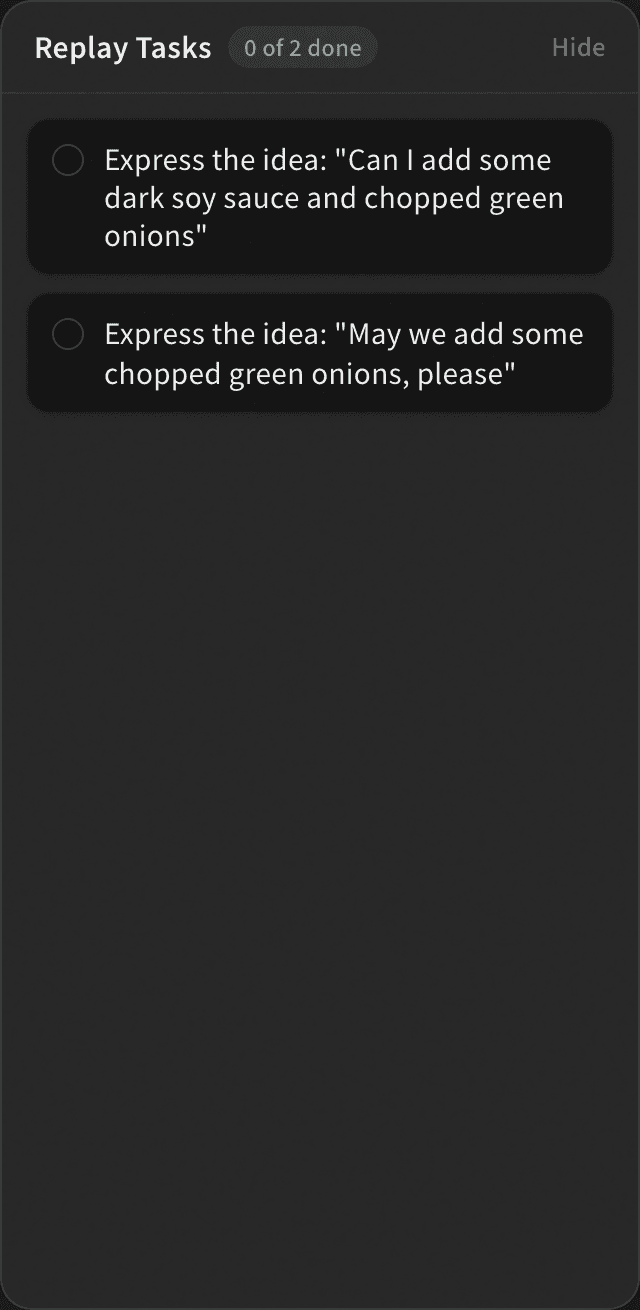
It drills the exact sentences you kept and the phrasing your tutor just taught you. No open-ended roleplay, no surprise idioms. Lesson Replay runs on your Practice Sentences. It's your lesson again, with room to fumble in private until you're proficient and confident enough to say it in public.
It runs two ways with AI:
- Text, where you type at your own pace and look things up with nobody waiting on you. (There's standard Speech-to-Text here)
- Live Call, for when you're ready to put your mouth where your flashcards/sentences are and say it out loud, in real time.
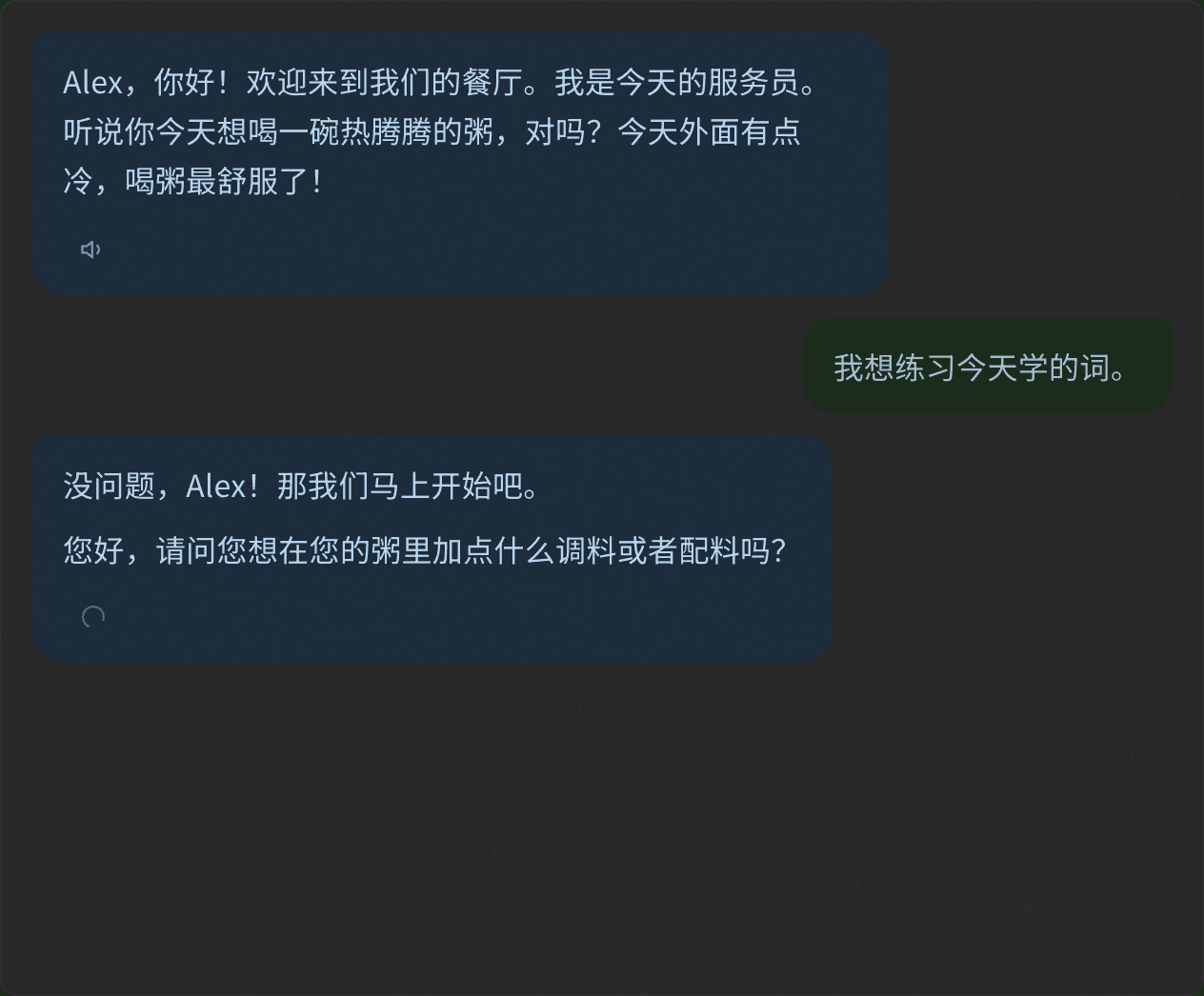
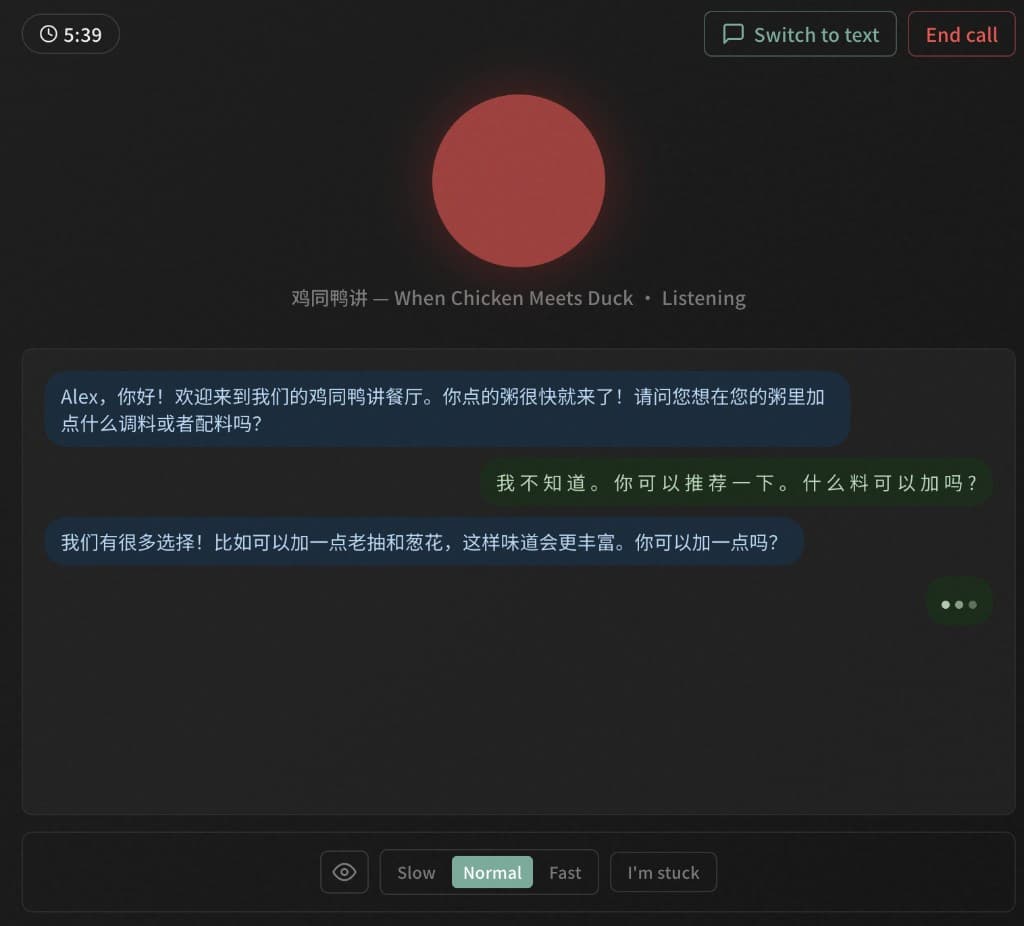
You start it when you're ready for it. I promise there's no ambush the second class ends.
And to be clear about what it isn't: Lesson Replay doesn't replace the human on the other end of your call. I've said this since day one: ChickenDuck supercharges the lesson, it doesn't stand in for the teacher. Your tutor still teaches and still corrects. Practice Sentences captures those corrections; Lesson Replay is the reps in between, the difference between “I'll remember that word” and “I just said that sentence, badly, and slightly less badly the second time.”
It's in Beta
Beta is a polite word for “this will occasionally do something dumb.” It might drill a sentence into the ground or steer somewhere strange. I'd rather ship it to you rough and hear what breaks than polish it for three more months in private. If it does something weird, tell me. That feedback is the actual roadmap to benefit you.
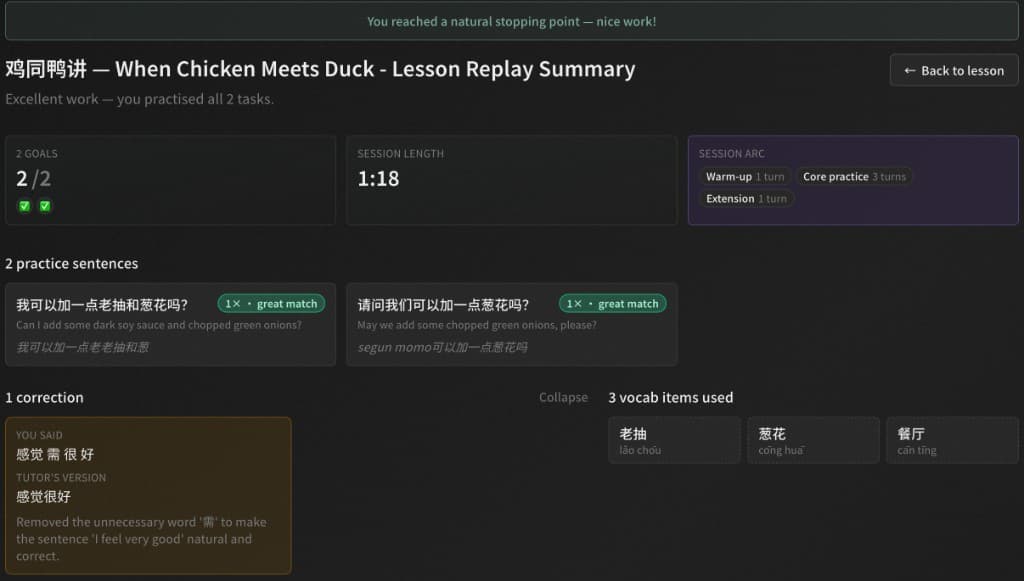
For years my entire Chinese ceiling was ordering chicken rice. The words were never the hard part. Saying them was. Practice Sentences is my attempt to write down exactly what I couldn't say yet; Lesson Replay is where I practice saying it. Both are live for students now. Try them right after your next lesson, while it's still fresh.
试一试
Give It a Try
If you are learning English or Chinese with a tutor, give ChickenDuck a look. Free trial, no credit card required.