From Chicken Rice Chinese to Building a Language Learning Tool
This is the story of how a Singaporean who gave up on Chinese decided to build a tool to learn it properly.
The ACS Boy Problem

If you grew up in Singapore and went to ACS (Anglo-Chinese School), there is a certain reputation that follows you. It is not about being smart or just being wealthy. It is about being absolutely terrible at Chinese.
I fit the stereotype perfectly. I took Chinese Language Syllabus B (CLB), which is a grossly simpler version of the normal Chinese syllabus. Think of it as Chinese on training wheels, except the training wheels also had training wheels.
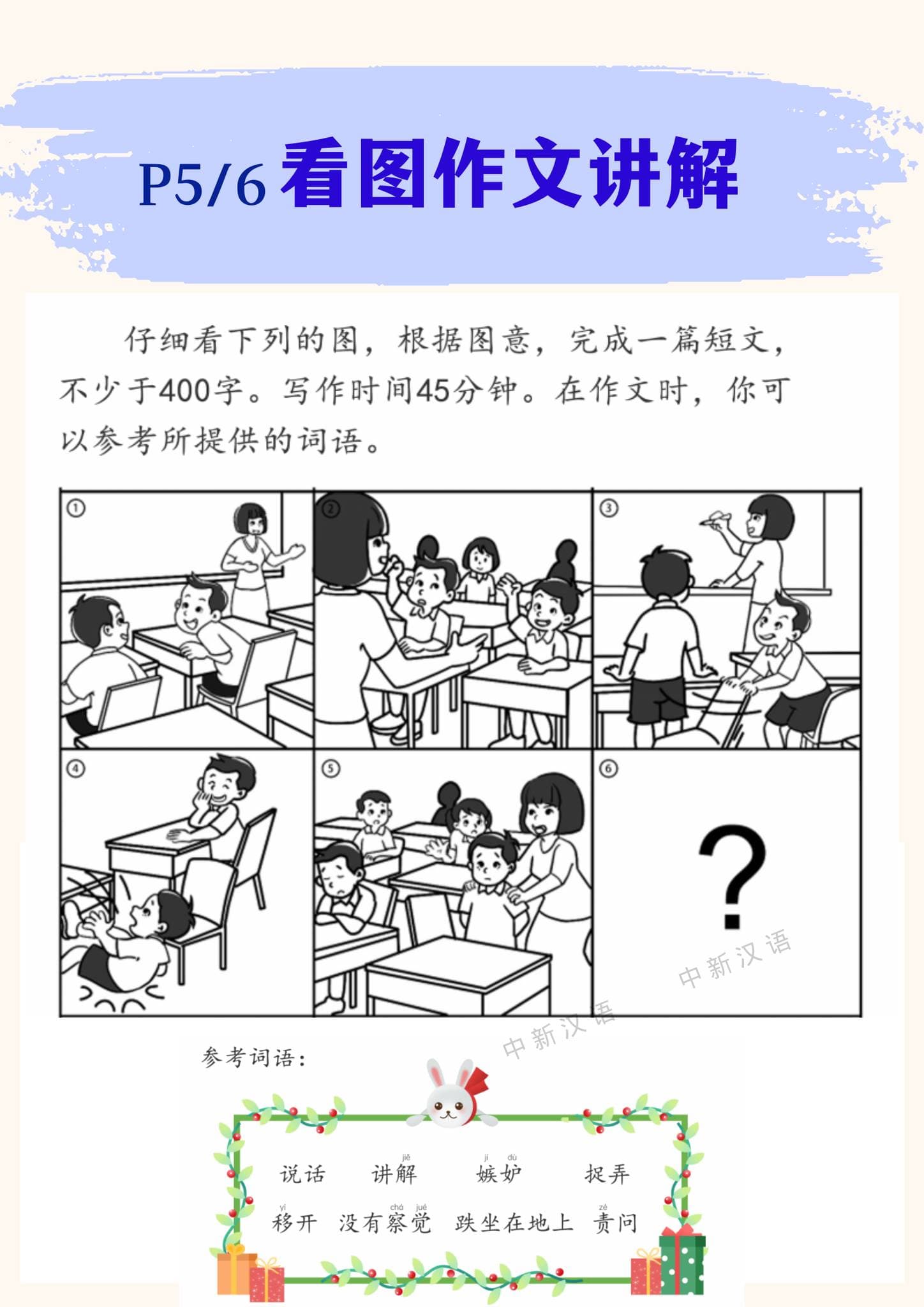
看图作文 (Picture-based writing) — For P5/P6 students (11/12 year olds) with helping words. In CLB, I was getting this in Junior College! (17/18 years old)
Rumour has it that Syllabus B was created because a minister's kid was bad at Chinese, and the government eventually decided to just... lower the bar. I have no way of verifying this but I honestly won't be surprised.
Giving Chinese Back to the Teacher
By the end of Junior College, I made a very deliberate decision. I was going to 把全部学的华文还给老师 — "give all the Chinese I've learned back to my teacher."
The Education Refund Policy — Returning everything I learnt the moment exams were over
All I functionally needed to know how to say was:
白鸡,胸肉,加肉,加肝
White chicken rice, breast meat, extra meat, add liver. I think. To be honest, I am not 100% sure 加肝 actually means "add liver." And the fact that I am unsure about a phrase I have been saying for years tells you everything you need to know about my Chinese.
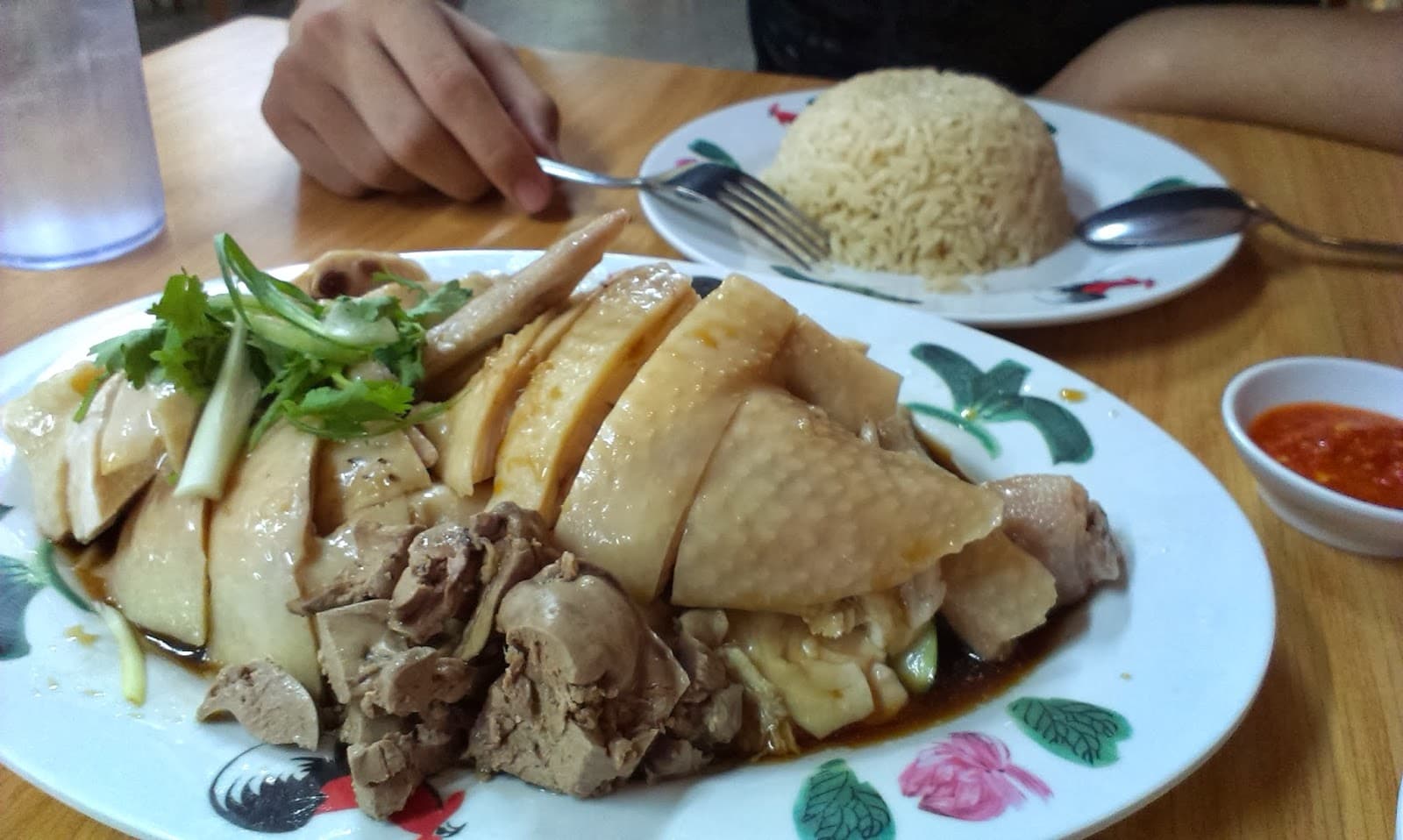
Chicken rice Chinese. That was the ceiling. And I was at peace with it.
P.S. Friends from overseas, you gotta try this national treasure
I also made another decision that felt rational at the time. I would intentionally only work with Western companies. Not because I had anything against Chinese companies, but because my Chinese was so bad that it would have been a professional liability. Easier to avoid the problem than to confront it.
The Wake-Up Call
Then two things happened that made me reconsider my life choices.
First, I realized that global companies do not just sell in the West. Companies that actually operate across Asia actively look for people who can speak Chinese to interface with clients from GCR (Greater China Region). China is a superpower. The inability to speak the language is not a quirky personality trait. It is a career limitation I had voluntarily placed on myself.
Second, and this one hit differently, I started feeling genuinely ashamed. Not in a dramatic, existential way. More like a slow, uncomfortable realization that I am ethnically Chinese, my mother tongue is literally Mandarin, and I could not hold a conversation that went beyond pointing at food.
Thankfully, that shame was short-lived because it quickly morphed into a far more useful question:
What if I could actually speak Chinese?
Not fluently. Not like a CCTV news anchor. Just... competently. And once I asked that question, the possibilities started stacking up.
- Travelling to China without effectively "dying" from a communication standpoint
- Commanding higher pay, because bilingual candidates are genuinely in demand
- Having deeper conversations with people I currently could not connect with, simply because there was a literal language barrier
The barrier was never talent. It was a decision I had made at 18 to stop trying. And decisions can be reversed.
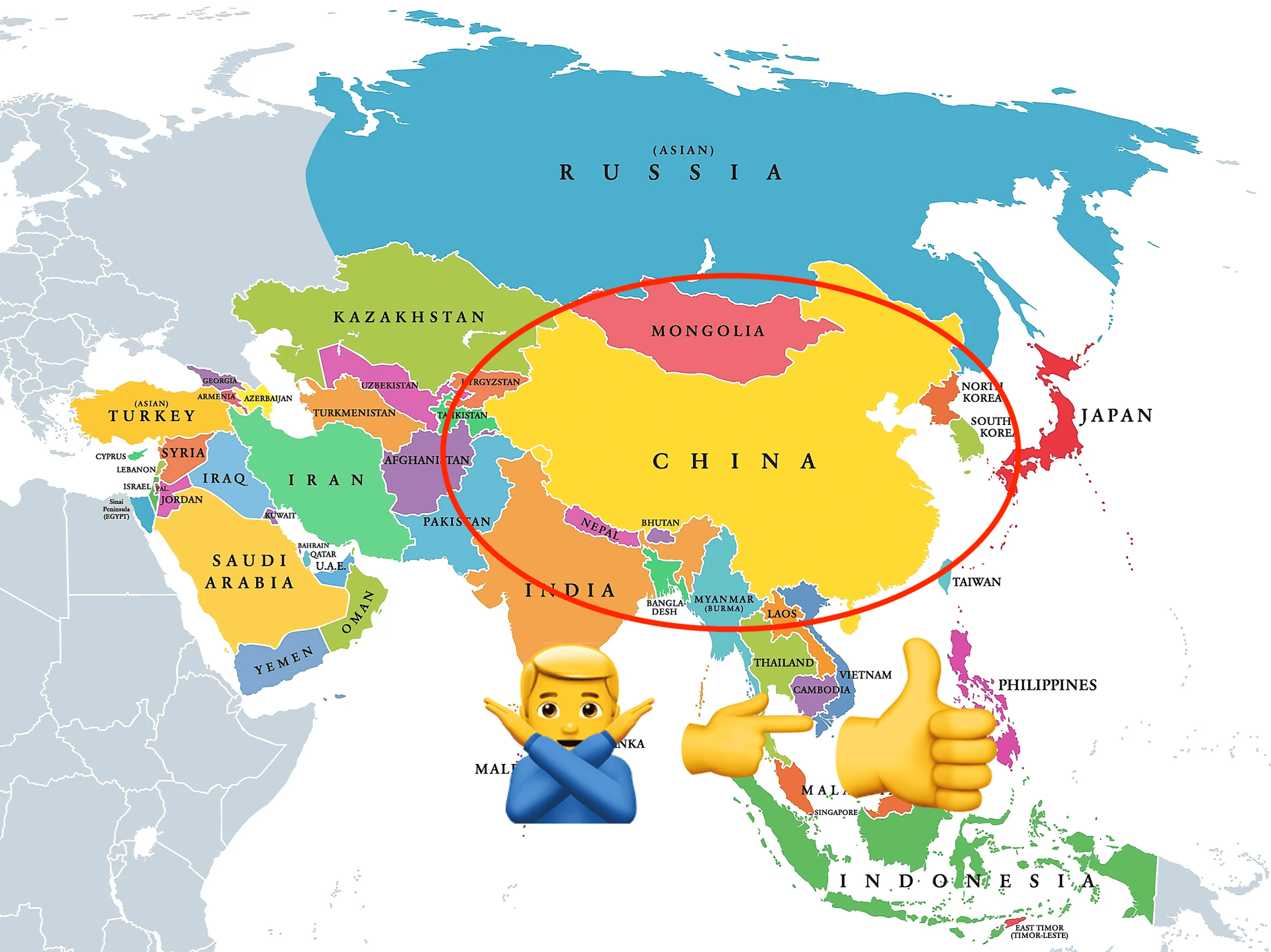
China is now a possibility
Back to School
So I did what any reasonable adult does when they want to undo a decade of deliberate ignorance. I Googled "how to learn Chinese online."
Duolingo did not cut it. I needed to practise conversationally, not collect virtual gems for matching 苹果 to "apple." I eventually landed on Preply, a platform for 1-on-1 online tutoring. Found a teacher, started classes, and I have been at it for about six months now.
The classes were working. My Chinese was (very) slowly getting less terrible. But two things were driving me up the wall.
The Problem
ChickenDuck was not born from a startup idea or a market opportunity. It was born from me being frustrated with my own workflow. Two specific problems kept showing up.
Problem 1: Missing what was said

During lessons, I would often ask my teacher what she "said just now". Either I did not quite catch what she said, or there was a specific word I had never encountered before. The conversation would pause, she would ask "which part are you asking about?" and then we go into trying to figure out what I was referring to rather than actually learning.
Annoying, but manageable. Not the main problem.
Problem 2: The flashcard tax
This was the real killer. After every lesson, I had to consolidate everything I learned into flashcards. I am a firm believer in spaced repetition. The science is clear that it is one of the most effective methods for moving knowledge from short-term to long-term memory. Flashcards were non-negotiable.
The problem was the process. Depending on how many new words were introduced, it took me 1-2 hours after each class to create flashcards. Finding the pinyin. Writing the definition. Adding example sentences. Cross-referencing what was actually taught versus what I half-remembered. It was entirely manual and overwhelmingly tedious.
I was spending more time processing my lessons than actually learning from them. The administrative overhead was killing my momentum.
The Solution
The idea was simple. What if I built a system that eliminates the admin overhead of language learning so I could focus on the actual learning?
Here is what I built:
1. Real-time transcription.
ChickenDuck transcribes the entire lesson in real time. Every word my teacher says, every word I butcher in response, all of it. If I miss something mid-lesson, I scroll up. I can highlight the Chinese characters and see what it means instantly. No more "sorry, what did you say?" five times per class.
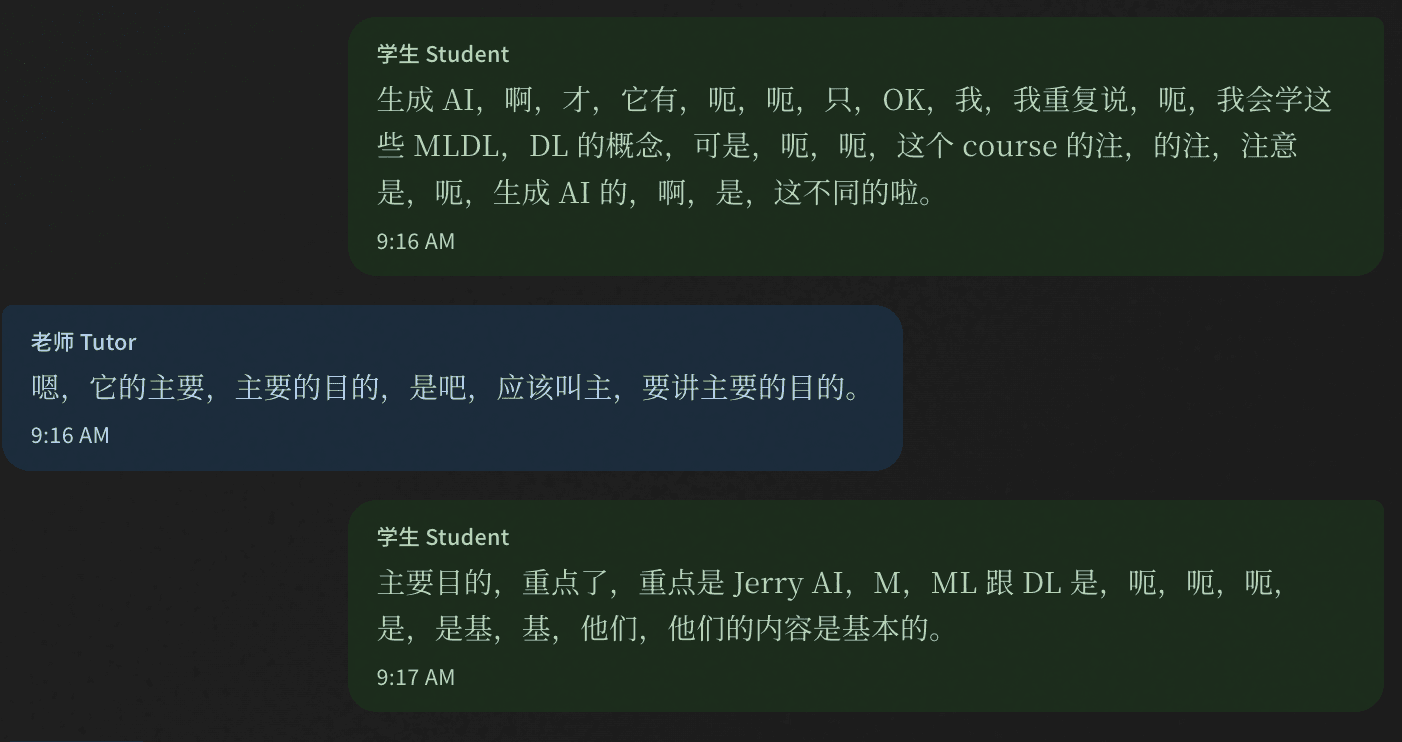
Never thought I'd have a conversation about Machine Learning / Deep Learning in Chinese
2. AI-powered vocab suggestions.
Instead of me manually hunting for new words after class, ChickenDuck proactively identifies vocabulary from the lesson transcript & assets (PDFs, Powerpoints) and consolidates teaching moments into flashcards. Automatically. With AI-generated pinyin, definitions, and example sentences.
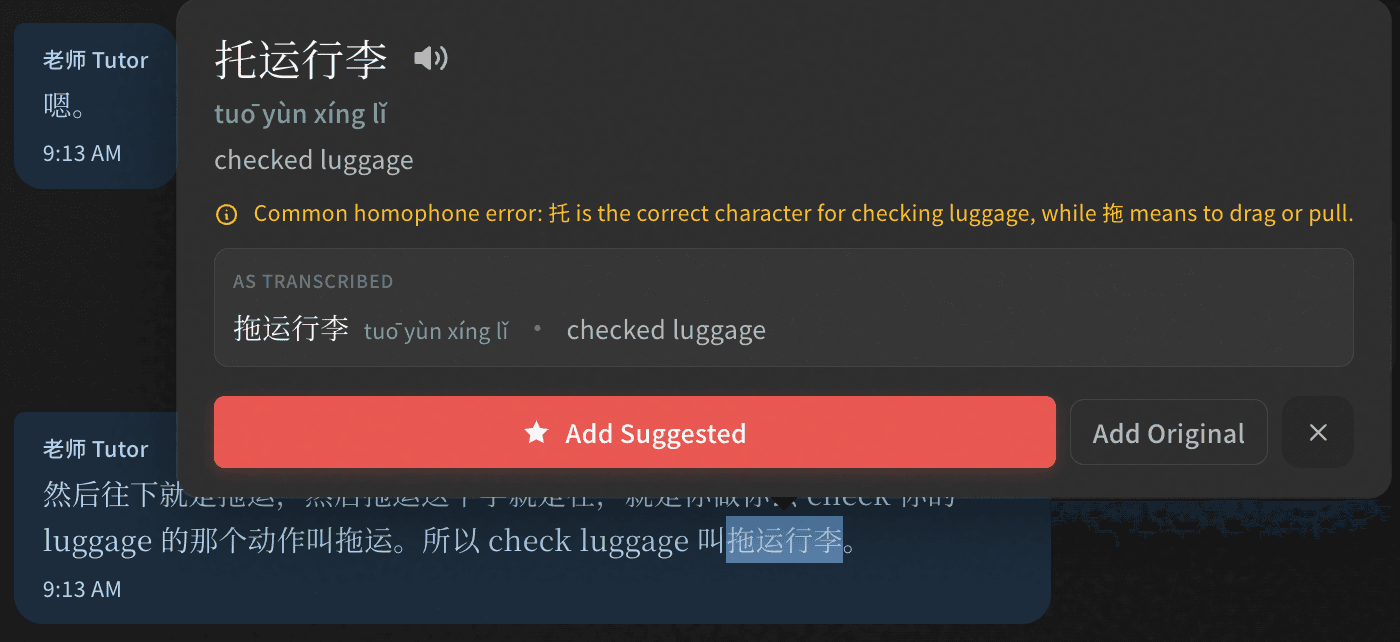
AI can even detect incorrect transcriptions for homophones
3. Automated Lesson-to-Flashcard Funnel.

Everything that transpired is captured & packaged into a lesson object that encapsulates an AI Summary, the Lesson Transcript, Vocabulary (which become Flashcards) & Files. In essence, start from a lesson, end with flashcards.
4. Spaced Repetition System.
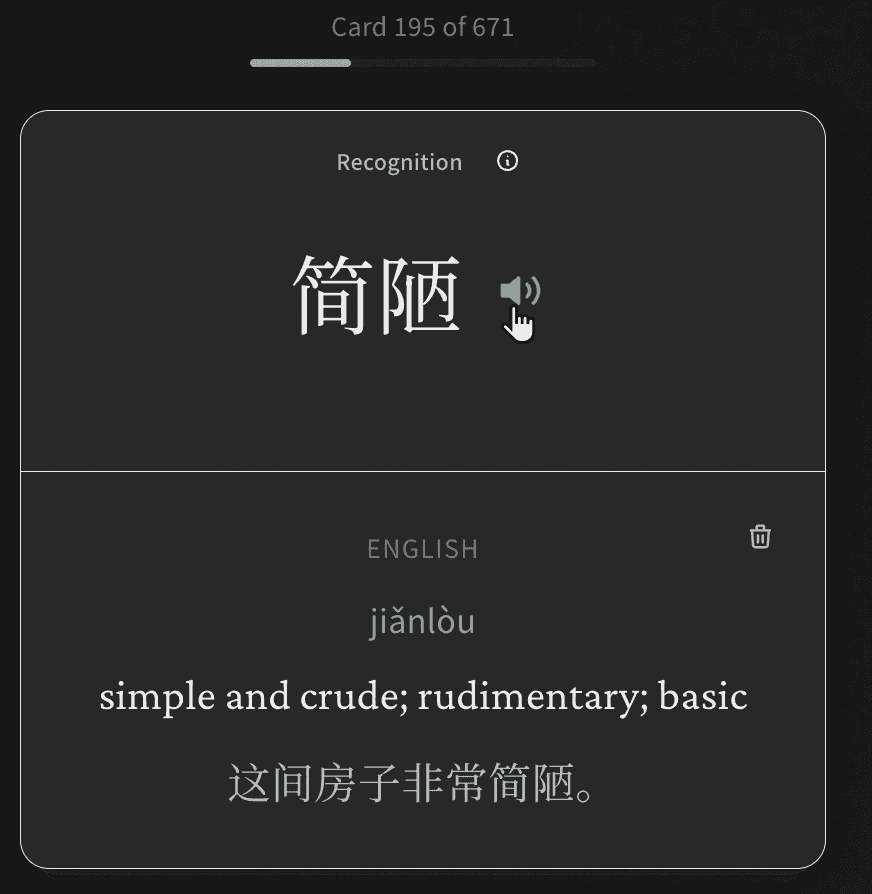
This is the core. A built-in SRS algorithm handles review scheduling. It knows when I am about to forget a word and surfaces it at exactly the right time. Recognizing a character when you see it is a very different skill from producing it from memory. ChickenDuck accounts for both.

Swiping left & right but for language learning
5. Pronunciation help.
If I need to hear how something sounds, Google TTS handles that. Simple, effective, no frills unlike AI-tutors which will inevitably have false positives (too lenient) / negatives (too strict) on your pronunciation.
The Result
The 1-2 hours I used to spend on post-lesson flashcard creation dropped to nearly zero. That time now goes into actually reviewing flashcards and reinforcing what I learned.
It is a boring result, honestly. "I saved time on admin work." But anyone who has tried to maintain a consistent language learning habit knows the truth. It is not the learning that kills you. It is the overhead. The friction between finishing a lesson and starting your review. Remove that friction, and suddenly consistency becomes possible.
Why "ChickenDuck"?

Now for the elephant (or the chicken, or the duck) in the room.
In Chinese (well, Cantonese to be precise), there is an expression:
鸡同鸭讲
The literal translation is "chickens and ducks talking to each other." It describes a situation where communication completely breaks down because of a language barrier. A chicken clucks. A duck quacks. Neither understands the other. Both are trying their best. That was me and Chinese-speaking folks for the better part of my life.
The goal of ChickenDuck is to bridge that gap. It's an AI-assisted tool that pairs with the time you're already spending with your language tutor. It does not replace your teacher. It supercharges the experience around them.
And honestly? My wife describes the naming the best: "because it's cute." I have to concede here. Cute sells. She is right. Happy wife, happy life.
What ChickenDuck Is Not
I should be upfront about this. ChickenDuck is not trying to be Duolingo. It is not Speak. Those apps are standalone. You open them, you learn, you close them. They are great at what they do.
ChickenDuck is different. It piggybacks off your existing classes with a real human tutor and supercharges the entire experience. The tutor does the teaching. ChickenDuck handles everything else — the transcription, the flashcard generation, the spaced repetition, the review. It is the infrastructure around your lesson, not a replacement for it.
试一试
Give It a Try
If you are learning English or Chinese with a tutor and are tired of the admin overhead eating into your actual learning time, give ChickenDuck a look. There is a generous free trial for you to experiment with your 1-on-1 language lessons, no credit card required.